🔰 BEGINNER LEVEL: Choosing the Right Head Unit
What a Head Unit Does
The head unit — also called the source unit, deck, or receiver — is the brain of the car audio system. It handles:
- Source selection: Radio, streaming, USB, Bluetooth, auxiliary
- Signal processing: Basic EQ, crossovers, level control
- User interface: Display, buttons, touchscreen, voice control
- System control: Remote turn-on output for amplifiers, power antenna
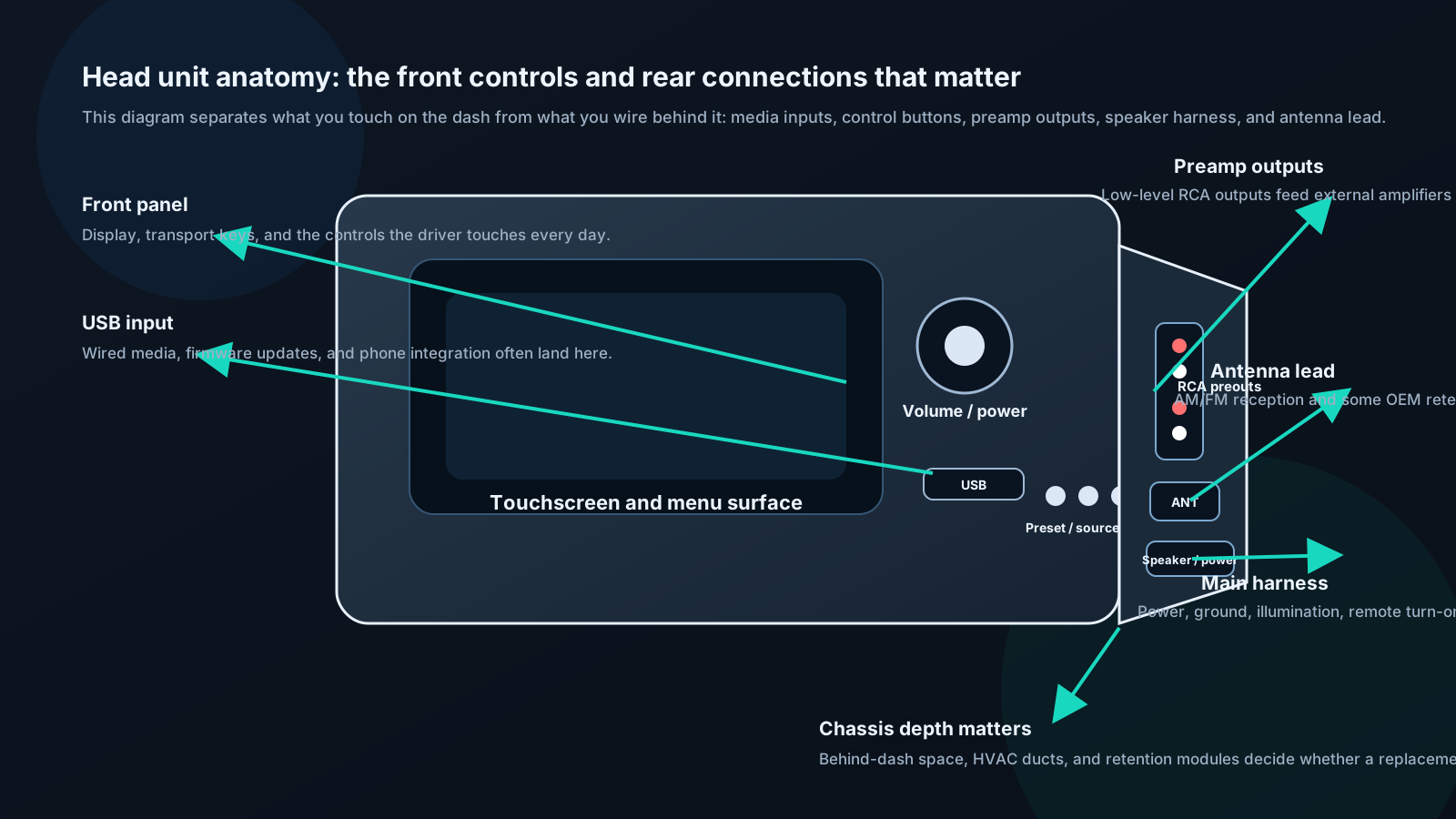
Every head unit has two fundamental outputs:
Speaker outputs (built-in amplifier): 4 channels, typically 18–22W RMS each (despite "50W max" marketing claims). Good enough for factory speakers without additional amplification.
Preamp outputs (RCA jacks): Low-level signal for external amplifiers. Voltage determines signal quality: 2V is adequate, 4V is good, 5–6V is excellent.
If you're adding external amplifiers — which almost everyone does for a quality system — the preamp output voltage matters significantly. It determines how much noise floor you can afford to add from cabling and amplifier input stages.
Single-DIN vs Double-DIN
Single-DIN: 2 inches tall × 7 inches wide. Older standard, still common in trucks and economy vehicles. Limited touchscreen size. Typically less featured.
Double-DIN: 4 inches tall × 7 inches wide. Standard for most modern aftermarket units. Large touchscreen possible. Full Android Auto / Apple CarPlay support.
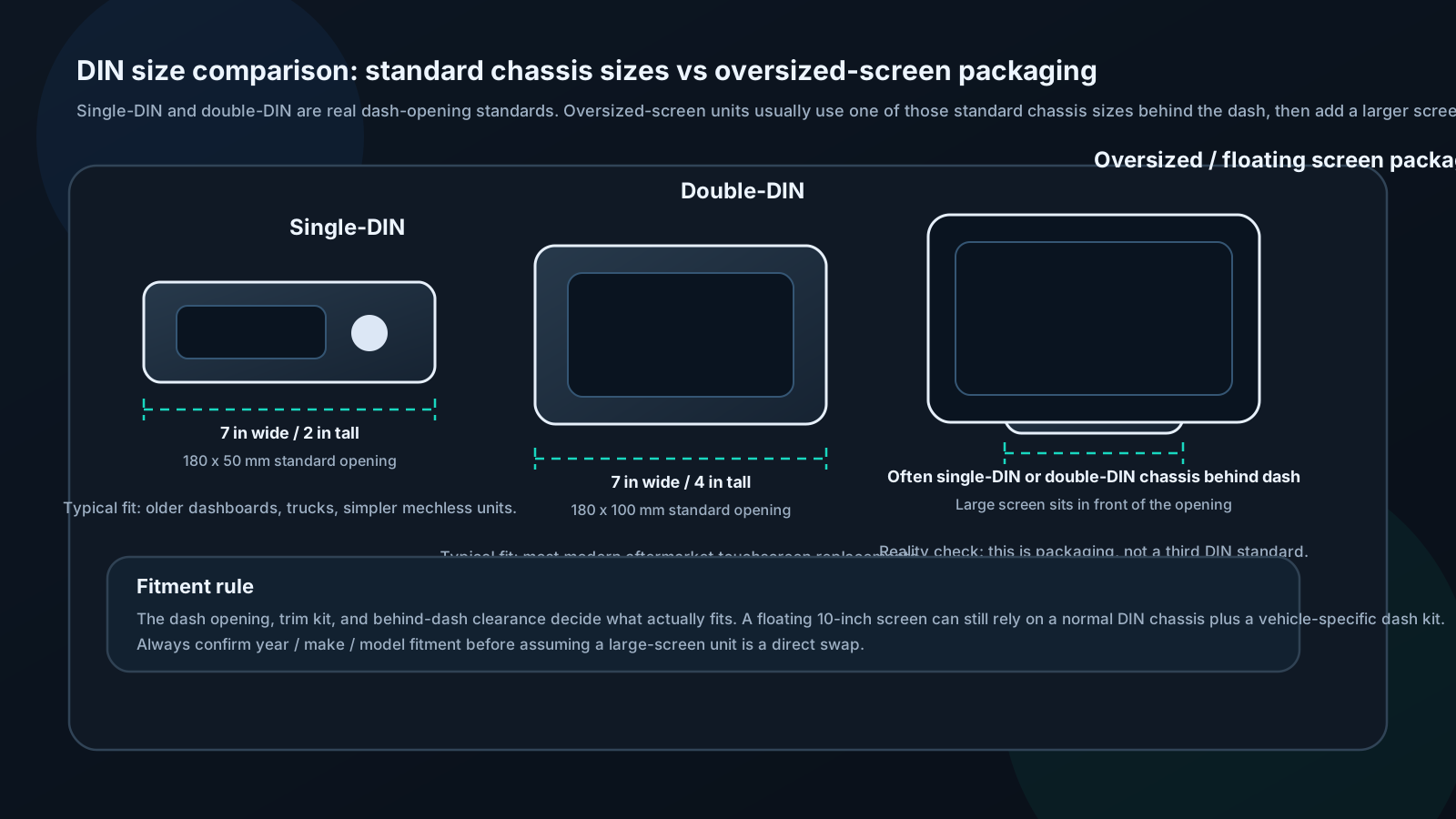
Checking your vehicle: Use Crutchfield, Metra, or Scosche compatibility tools. Enter year/make/model and they'll tell you the DIN size, required adapter kit, and what wiring harness you need. Never guess on this — dash shapes vary wildly.
Key Features to Evaluate
Preamp output voltage: - 2V: Minimum acceptable - 4V: Good for most systems - 5–6V: Excellent, use with high-performance builds
Preamp output channels: - 2-channel (front): Basic, forces sharing a single pair of RCAs - 4-channel (front + rear): Standard - 6-channel (front + rear + subwoofer): Better, dedicated sub output - 8-channel: Premium, useful for active 3-way systems
Built-in DSP: - Time alignment capability - Parametric EQ bands (4–13 typical) - High-pass filtering per channel - Some units include room correction (Audyssey, DTA)
Source inputs: - AM/FM tuner (still useful for emergency/local) - USB-A, USB-C - Bluetooth (5.0 or later preferred) - Auxiliary 3.5mm - Apple CarPlay / Android Auto (wired and wireless) - SiriusXM readiness (requires separate tuner) - HD Radio
Display: - 6.2", 7", 9", 10.1" diagonal most common - Capacitive touchscreen vs resistive (capacitive is better — responds to fingertip) - Brightness: 500–1000 nits acceptable, higher better for direct sunlight
Selecting by Use Case
Budget daily driver ($100–200):
Pioneer MVH-S622BS, Kenwood KMM-BT738HD - Bluetooth, USB, basic EQ - Adequate preamp output (2–4V) - No Apple CarPlay - Gets the job done
Mid-range with CarPlay ($250–400):
Pioneer AVH-W4500NEX, Kenwood DDX9907XR - Wireless CarPlay and Android Auto - 4–5V preamp output - Better time alignment and EQ - Good display quality
High-performance ($400–800):
Pioneer DMH-WT8600NEX, Kenwood Excelon DDX9907XR - 6V preamp output - Full DSP suite - Multiple preamp output pairs - Premium display
Reference-grade ($800–1500+):
Alpine Halo iLX-F511, Clarion NX706 - 7V+ preamp output - Advanced tuning software - OEM integration options - Used as signal processor in high-end builds