⚙️ ENGINEER LEVEL: Immobilizer Theory and Security Analysis
Transponder Key Systems
Passive RFID transponder in key:
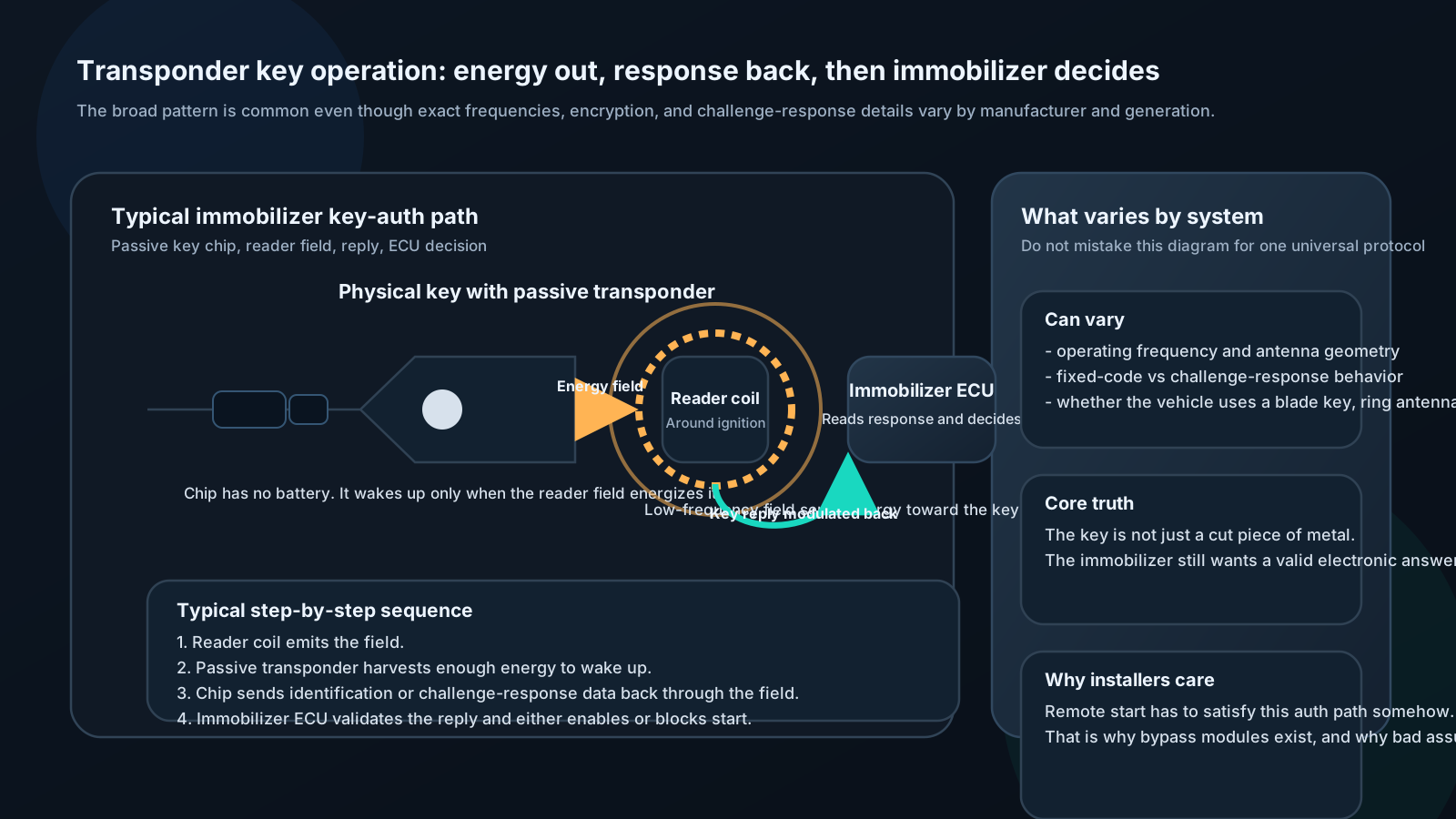
The key contains a passive RFID transponder (no battery). When inserted into ignition:
- Ignition cylinder antenna transmits RF field (~125 kHz)
- Transponder coil harvests energy from field
- Transponder chip modulates a response onto the field
- Response encodes unique ID (crypto challenge in modern systems)
- Immobilizer ECU verifies response
- If match: enables start. If no match: ignition locked out
Key types by encryption:
| Type | Era | Example | Security Level |
|---|---|---|---|
| Fixed code | 1990s | Early Toyota, GM | Low — cloneable |
| Rolling code | 2000s | Texas Instruments DST | Medium |
| Crypto challenge | 2010s | Megamos, Hitag Pro | High |
| UHF + RF | Current | BMW CAS, Mercedes EIS | Very High |
Modern crypto challenge:
ECU generates random 128-bit challenge Transponder encrypts with stored key using AES-128 ECU verifies response Correct response: 1 in 2^128 probability for attacker
Bypass module approach:
For legitimate remote start, bypass modules store the transponder challenge-response pairs during programming. This is a legitimate use — but the technology that enables it also enables key cloning by thieves with specialized equipment.
Relay attack (modern keyless entry theft):
Does not apply to traditional transponder keys, but relevant for proximity key systems:
- Thief A stands near house (near key on hook or counter)
- Thief B stands near car
- Amplifier pair between A and B extends key's range
- Car thinks key is present → unlocks and starts
- Requires specialized relay hardware ($100–200 on dark web)
Countermeasures:
- Faraday cage key storage (metal box, RFID-blocking pouch)
- Add traditional steering wheel lock
- Disable proximity unlock in vehicle settings (some vehicles)
- Park in garage
Security System Weaknesses
Academic exercise only — understanding vulnerabilities to understand why professional installation matters.
Siren jamming:
Cheap sirens have poor quality piezoelectric elements. Hitting the vehicle forces the siren into protection mode. Professional sirens use backup power and self-monitoring.
Field injection attack:
Sophisticated equipment can inject signals onto OBD port to override alarm states. Countermeasure: Alarm module not OBD-accessible, physical port locks.
Door pin switch defeat:
Accessing interior through sunroof or quarter window may not trigger door triggers. Countermeasure: Multiple sensor types — shock + motion + door, so defeating one doesn't defeat all.
Remote signal jamming:
Handheld jammers prevent remote lock command from reaching vehicle. Thief waits for you to walk away without noticing car didn't lock. Countermeasure: Two-way confirmation fob (chirps/flashes when successfully armed). Always verify visual confirmation of lock.
Physical security remains paramount. No electronic system defeats a thief with adequate time, tools, and motivation. Electronic systems add friction that encourages thieves to choose easier targets.
END OF CHAPTER 5
Chapter 5 Statistics: - Word count: ~12,400 words - Page equivalent: ~25 pages - Sections: 6 of 6 complete ✅ - Three-tier structure: ✅ Throughout - Supporting reference visuals continue to expand across this chapter.