Alternator Whine
Symptom: Whining tone, pitch rises and falls exactly with engine RPM. Present whenever engine runs. Audible even with no music playing (volume up, no source selected).
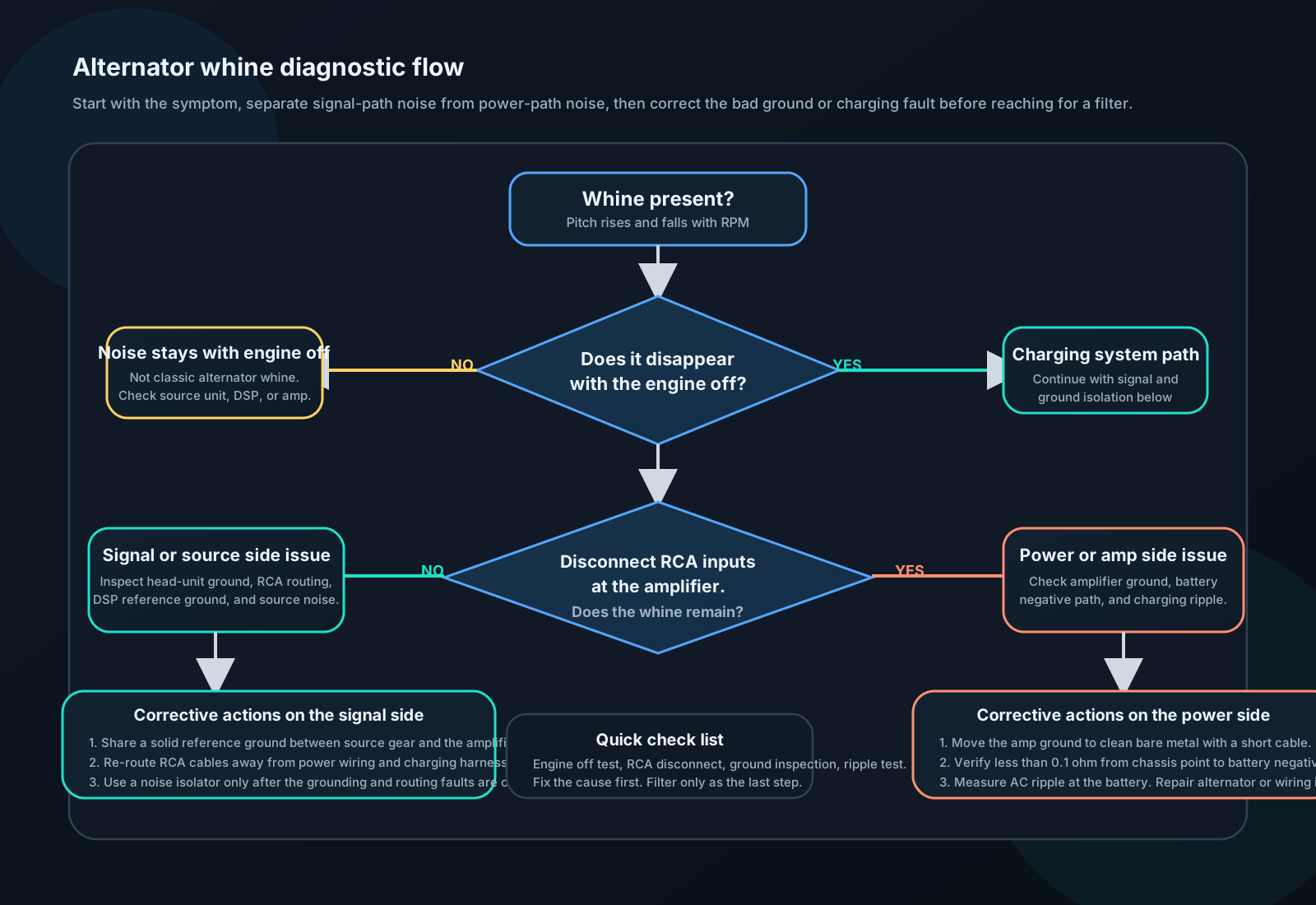
Root cause: Electrical ground loop. Two pieces of equipment are grounded at different points with different electrical potential. A small current flows through the RCA cable shield, creating a voltage that appears as an audio signal. The alternator's ripple frequency (300–900 Hz, proportional to RPM) modulates this.
Diagnostic steps:
Step 1: Confirm engine correlation Turn off engine. If whine disappears: alternator/electrical source confirmed. If whine persists with engine off: something else.
Step 2: Disconnect RCA cables at amplifier Leave amplifier on, RCAs disconnected. If whine disappears: noise is entering through RCA. If whine persists: noise is on the power lines or internal to amplifier.
Step 3: Check RCA ground loop The shield on the RCA carries ground noise. Unplug RCA at head unit end. If whine disappears: ground loop between head unit and amplifier.
Fix sequence (try in order):
- Improve amplifier ground — Move to better chassis point. Clean to bare metal. Shorter wire. Star washers. Verify <0.1Ω to battery negative.
- Improve head unit ground — Same procedure for head unit chassis ground.
- Star ground both — Run both grounds to the same chassis point (single reference).
- Re-route RCA cables — Ensure completely separated from power wires. Opposite sides of vehicle.
- Check alternator output — Measure AC ripple voltage at battery terminals (should be < 100 mV AC with engine running). If high, alternator diodes may be failing.
- Ground loop isolator — Last resort. 1:1 transformer in RCA path. Works but slightly degrades audio quality.