Crossover Frequency Quick Reference
Use this card when you need the first safe handoff zone before listening, measuring, and refining.
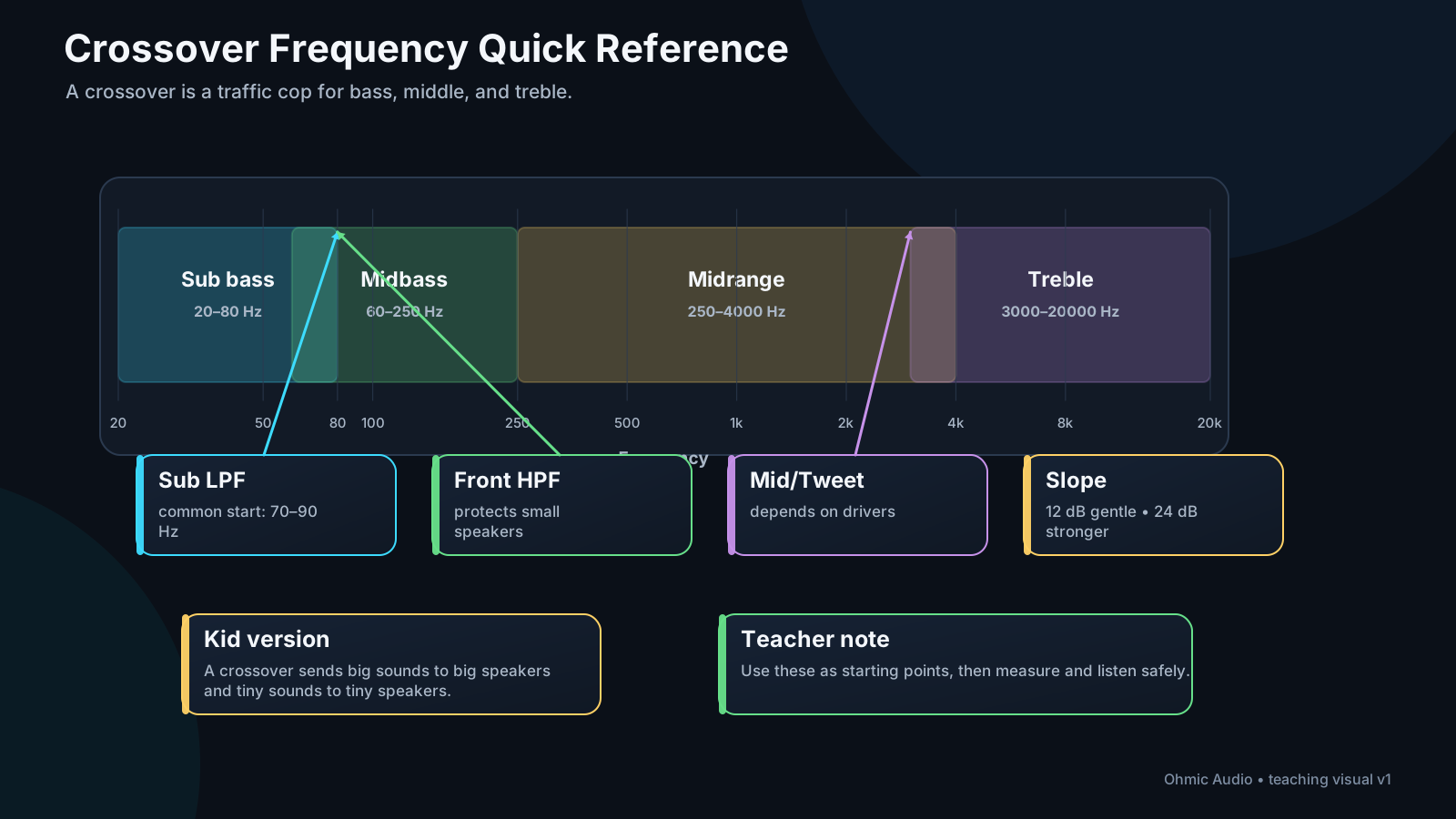
Tiny Version
Crossovers are lane markers for sound. Put each driver in the band it can play cleanly, then refine with measurement and listening.
Sub
20 to 80 Hz
20 to 80 Hz
Midbass
80 to 250 Hz
80 to 250 Hz
Midrange
250 Hz to 3 kHz
250 Hz to 3 kHz
Tweeter
2 kHz and up
2 kHz and up
| Transition | Typical Range | Good starting slope | Remember |
|---|---|---|---|
| Sub to Midbass | 60 to 100 Hz | 24 dB/oct | 80 Hz is a common starting point |
| Subsonic filter | 15 to 25 Hz | 24 dB/oct minimum | Keep it below port tuning on a ported box |
| Midbass to Midrange | 200 to 500 Hz | 12 to 24 dB/oct | Depends on driver size and door behavior |
| Midrange to Tweeter | 2 to 5 kHz | 12 to 24 dB/oct | Respect tweeter Fs and power handling |
Use This Like A Card
- Need a sub handoff fast? Start around 80 Hz.
- Need a safe tweeter start? Stay comfortably above about 2 times Fs unless the driver data says otherwise.
- Need the full setup process? Leave the card and go to the DSP procedure page.
Important: this card is a starting band guide, not a final tune. Use measurement, real driver limits, and the vehicle response to finish the job.
Next: Reading DSP Levels, Q, and Headroom, Q and Bandwidth Converter, and Setting Crossovers in a DSP.