🔰 BEGINNER LEVEL: How Ports Work
The Helmholtz Resonator Principle
A ported subwoofer enclosure is a Helmholtz resonator — the same physics that makes a bottle "hoot" when you blow across the opening. The air mass in the port and the air volume inside the box form a spring-mass system that resonates at a specific frequency.
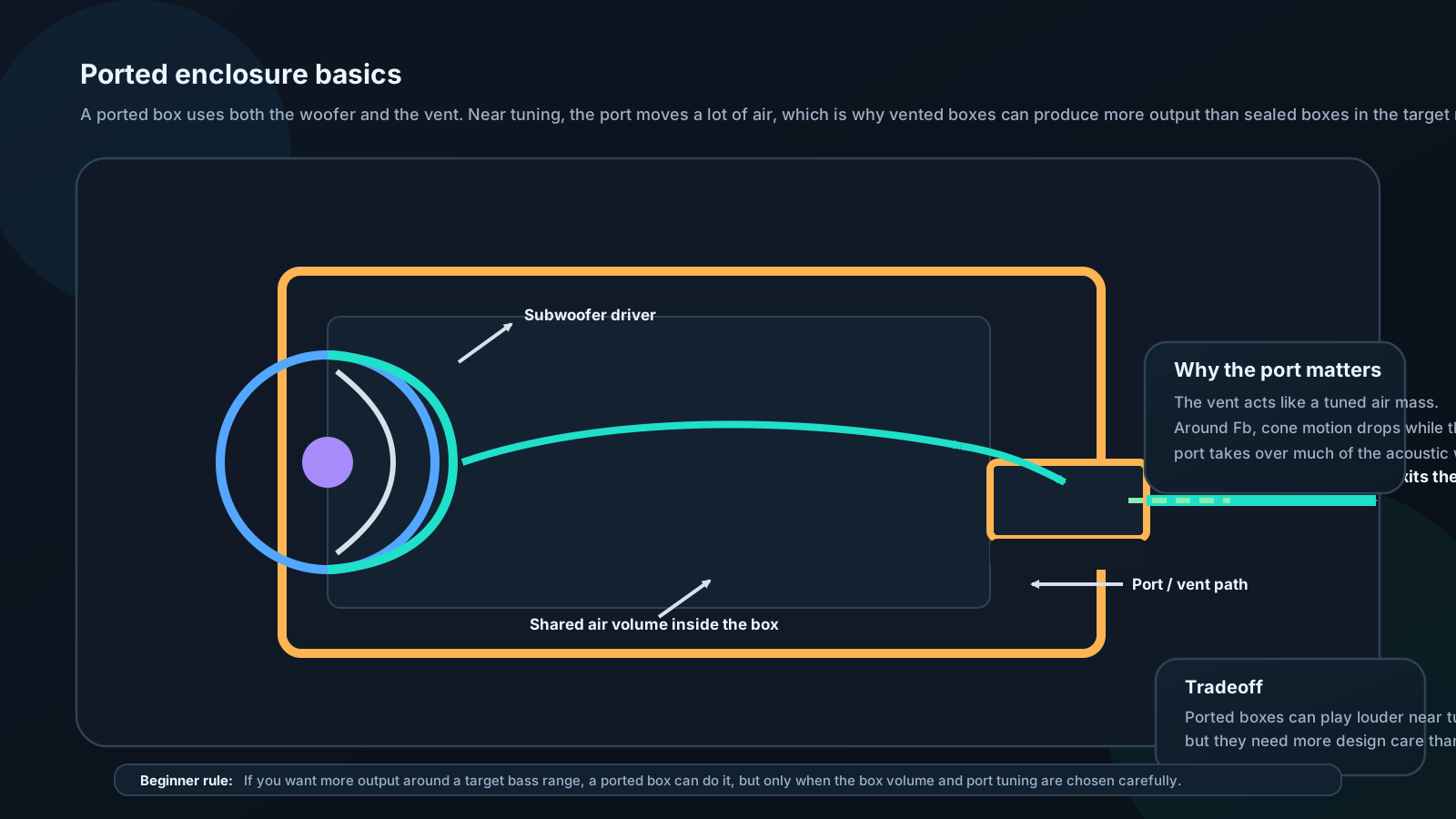
At the port's resonant frequency (Fb), something remarkable happens:
- The driver cone nearly stops moving — the port does the work
- The port pumps air powerfully — most acoustic output comes from the port, not the cone
- Cone excursion drops dramatically at Fb — the driver is protected at its most efficient point
Below Fb, the port loses effectiveness, the cone takes over, excursion spikes, and the driver becomes vulnerable to damage. This is why ported enclosures require a subsonic filter — without one, a bass drop in a song can send the cone crashing into its limits below the tuning frequency.
Choosing Tuning Frequency
Fb = 0.8 × Fs (conservative): Extends bass below the driver's natural resonance. Lower output at Fb but better deep bass. More excursion near Fb.
Fb = Fs (neutral): Good balance of extension and output. Safe operation.
Fb = 1.1 × Fs (efficiency): Maximum output centered above driver resonance. Less deep bass. Common for SPL competition tuned to specific frequencies.
For music listening: Target Fb between 30–45 Hz for full bass reproduction. 35 Hz is a good all-around target for most popular music.
For competition: Tune to within 1–2 Hz of the test frequency. Everything else follows.