🔧 INSTALLER LEVEL: Advanced Construction
Internal Bracing Design
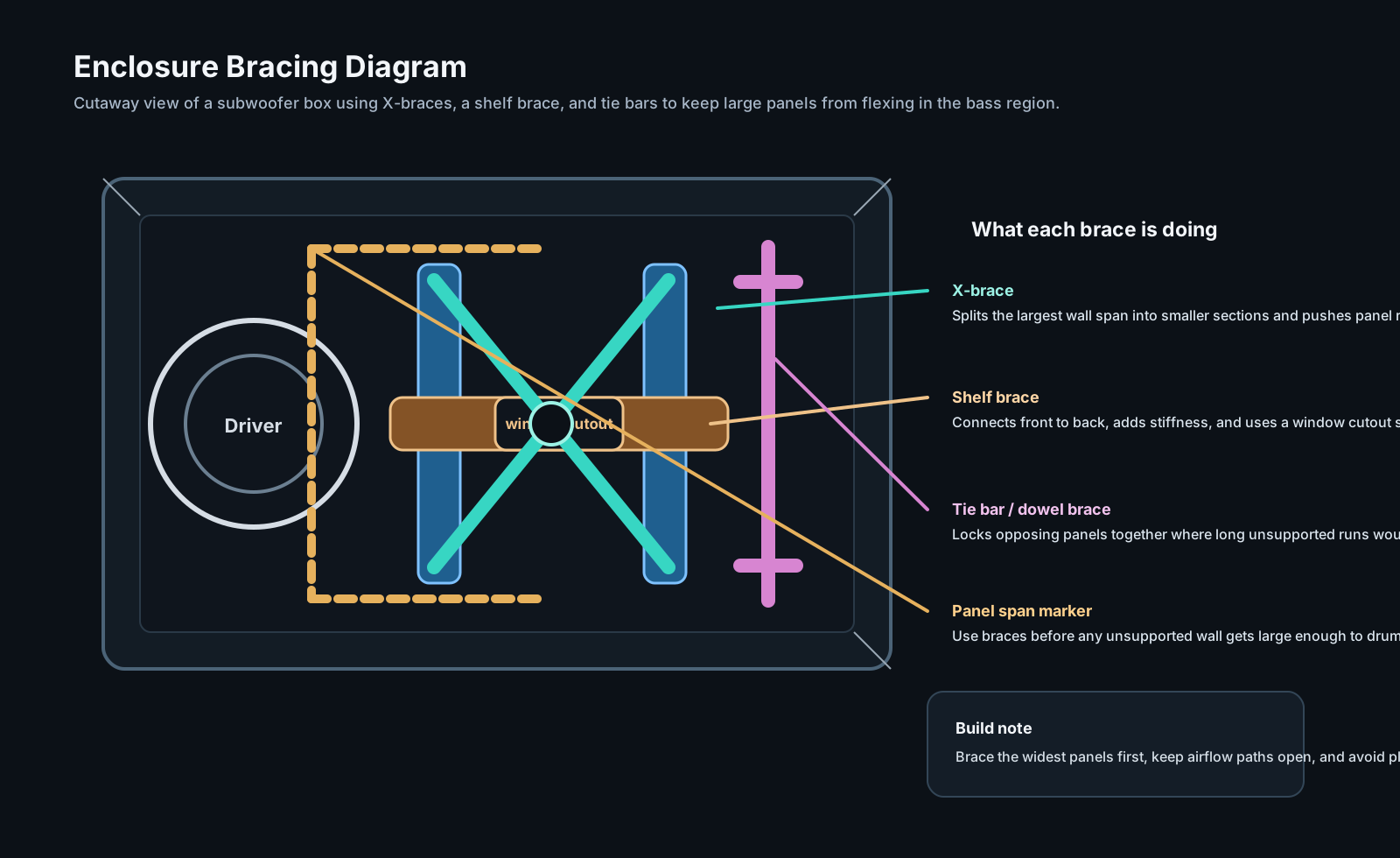
Unbraced enclosure panels flex under the pressure waves generated inside the box. This converts electrical energy into mechanical vibration of the box walls — wasted energy that also colors the sound with panel resonance frequencies.
Panel resonance formula:
f_panel ≈ (π/2) × (h/a²) × √(E / (12ρ(1-ν²)))
Where h = thickness, a = longest dimension, E = Young's modulus, ρ = density, ν = Poisson's ratio.
For 3/4" MDF (h = 19mm), panel 300mm × 300mm:
f_panel ≈ 95 Hz (in subwoofer range — must brace)
Bracing methods:
Cross-brace: MDF strip from wall to wall across the largest panels. Divides the panel into smaller sections, raising resonance frequency above subwoofer range.
Shelf brace: Horizontal panel inside box connecting front/back and/or sides. Also increases effective wall thickness where it contacts.
Dowel bracing: Wooden dowels (25–40mm) glued between opposite walls. Very stiff in compression. Used in high-end speaker design.
Practical rule: No interior panel surface larger than 18" × 18" without a brace crossing it.
Finishing Techniques
Carpet wrap:
The traditional car audio enclosure finish. Spray adhesive (3M 90) on carpet and box. Wrap around corners, fold seams inside where possible, glue seams with contact cement. Use a stiff roller to eliminate bubbles. Cut corners diagonally and fold like wrapping a package.
Vinyl wrap:
Peel-and-stick vinyl creates a cleaner look. More difficult to wrap complex curves. Better moisture resistance than carpet. Looks more modern.
Fibreglass exterior:
For custom shapes. Lay fiberglass cloth over foam or wire framework, saturate with resin, sand smooth, apply gel coat or automotive paint. Skills required: fiberglass work, body filler, wet sanding. Result: seamless custom shapes impossible with flat MDF panels.
Automotive paint:
MDF requires sealing (several coats of primer, sand between coats) before painting. Edges especially need sealing — MDF absorbs primer like a sponge at cut edges. Wipe-on polyurethane or shellac as a first sealer, then automotive primer.