10.5 Enclosure Construction Techniques
🔰 BEGINNER LEVEL: Materials and Basic Build
MDF vs Plywood vs Alternative Materials
MDF (Medium Density Fiberboard): The industry standard for subwoofer enclosures. Dense, consistent, easy to cut accurately, machines cleanly for circular cutouts, doesn't flex easily, takes adhesives and screws well. 3/4" thickness for all panels except front baffle (use 1" or doubled 3/4").
Why 3/4" MDF specifically: Provides adequate stiffness vs weight tradeoff. Thinner (1/2") flexes too much above 100W. Thicker (1") is heavier and harder to work with for marginal improvement.
Void-free birch plywood: Used in premium builds. Stiffer than MDF for the same thickness. Lighter. Shows natural wood edge nicely. More expensive. Harder to get perfectly flat for driver sealing.
Fiberboard alternatives (particle board): Cheaper than MDF, slightly less dense. Works adequately but absorbs moisture more readily. Acceptable for budget builds.
High-density polyethylene (HDPE) or fiberglass: Used in custom fabricated enclosures (vehicles with unusual shapes). More work to build but creates finished surfaces. Required for any vehicle where MDF won't fit the space.
Basic Assembly Procedure
Cutting:
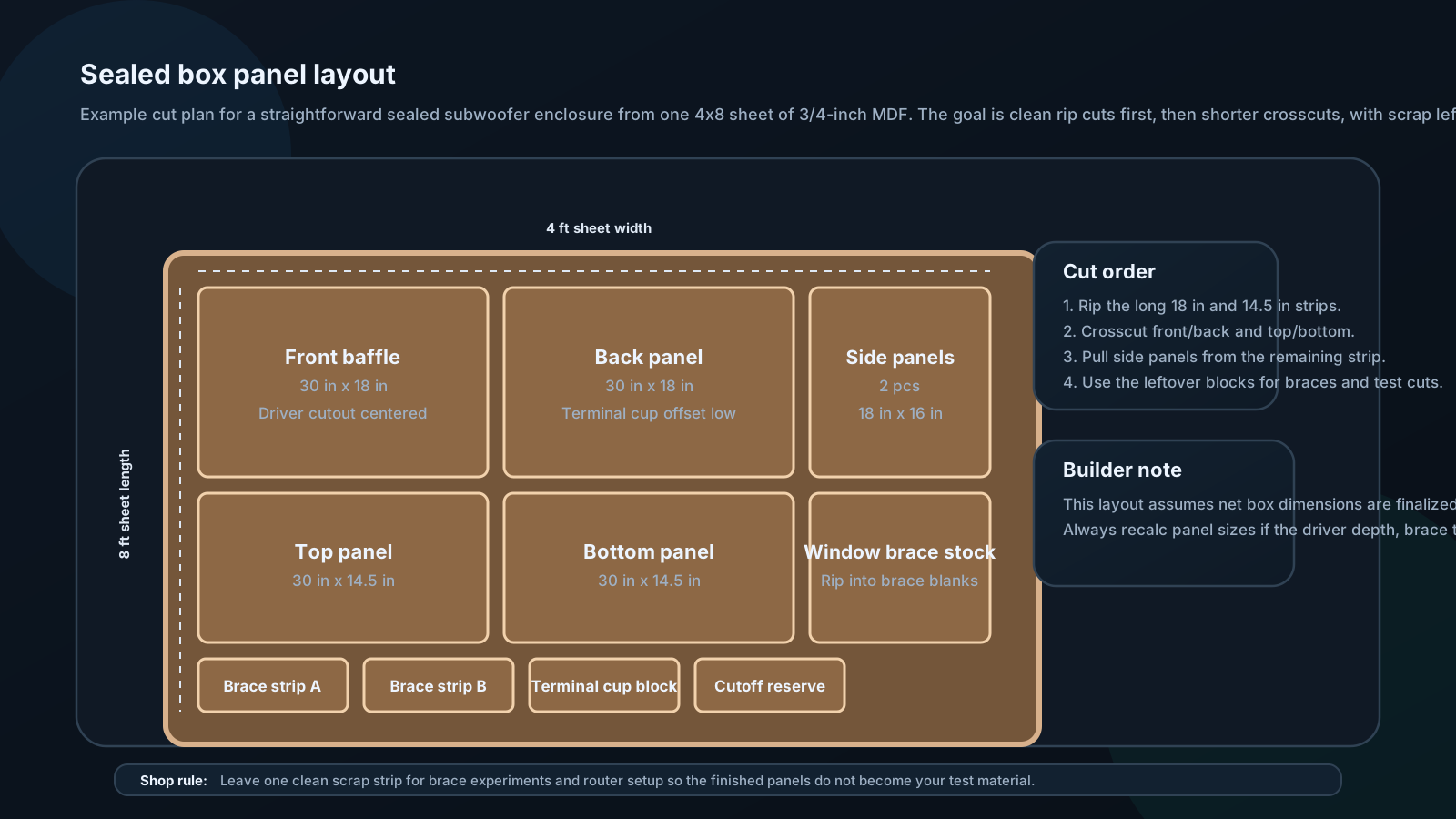
Use a table saw or circular saw with a fine-tooth blade (80 tooth for MDF). Cut panels slightly oversized, then trim to final dimension. MDF dulls blades quickly — expect to replace the blade after 2–3 enclosures.
Marking and drilling driver cutout:
Use a circle jig (router with trammel bar) for clean cutouts. The driver's published mounting hole diameter is the cutout you need. Check the driver's template if provided.
Assembly sequence:
- Dry-fit all panels without adhesive first. Verify alignment.
- Apply PL Premium polyurethane construction adhesive to all mating surfaces.
- Clamp or screw together. Screws every 4–6 inches along joints.
- Pre-drill pilot holes to prevent splitting.
- Wipe excess adhesive inside. Let cure 24 hours.
- Apply second bead of silicone caulk inside all seams after adhesive cures — belt-and-suspenders sealing.
- Install terminal cup before installing driver.
- Install driver with weatherstripping foam tape gasket between driver and baffle.
Checking for air leaks:
With driver installed and terminal cup sealed, light a candle or incense stick near all seams while someone applies pressure to the cone from outside. Smoke movement reveals leaks. Seal with additional silicone.
🔧 INSTALLER LEVEL: Advanced Construction
Internal Bracing Design
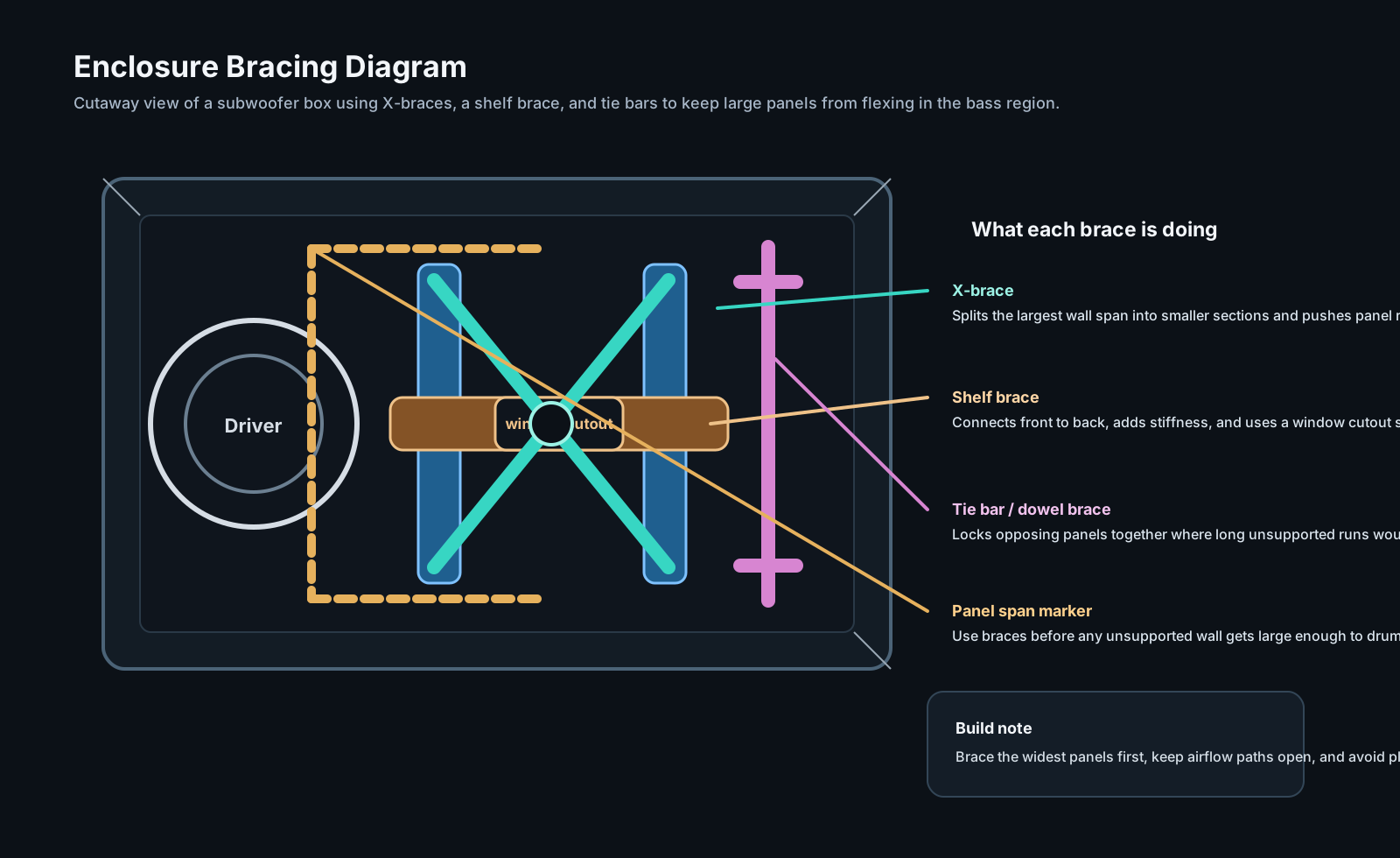
Unbraced enclosure panels flex under the pressure waves generated inside the box. This converts electrical energy into mechanical vibration of the box walls — wasted energy that also colors the sound with panel resonance frequencies.
Panel resonance formula:
f_panel ≈ (π/2) × (h/a²) × √(E / (12ρ(1-ν²)))
Where h = thickness, a = longest dimension, E = Young's modulus, ρ = density, ν = Poisson's ratio.
For 3/4" MDF (h = 19mm), panel 300mm × 300mm:
f_panel ≈ 95 Hz (in subwoofer range — must brace)
Bracing methods:
Cross-brace: MDF strip from wall to wall across the largest panels. Divides the panel into smaller sections, raising resonance frequency above subwoofer range.
Shelf brace: Horizontal panel inside box connecting front/back and/or sides. Also increases effective wall thickness where it contacts.
Dowel bracing: Wooden dowels (25–40mm) glued between opposite walls. Very stiff in compression. Used in high-end speaker design.
Practical rule: No interior panel surface larger than 18" × 18" without a brace crossing it.
Finishing Techniques
Carpet wrap:
The traditional car audio enclosure finish. Spray adhesive (3M 90) on carpet and box. Wrap around corners, fold seams inside where possible, glue seams with contact cement. Use a stiff roller to eliminate bubbles. Cut corners diagonally and fold like wrapping a package.
Vinyl wrap:
Peel-and-stick vinyl creates a cleaner look. More difficult to wrap complex curves. Better moisture resistance than carpet. Looks more modern.
Fibreglass exterior:
For custom shapes. Lay fiberglass cloth over foam or wire framework, saturate with resin, sand smooth, apply gel coat or automotive paint. Skills required: fiberglass work, body filler, wet sanding. Result: seamless custom shapes impossible with flat MDF panels.
Automotive paint:
MDF requires sealing (several coats of primer, sand between coats) before painting. Edges especially need sealing — MDF absorbs primer like a sponge at cut edges. Wipe-on polyurethane or shellac as a first sealer, then automotive primer.
⚙️ ENGINEER LEVEL: Modal Analysis and Loss Mechanisms
Finite Element Analysis for Enclosure Design
Panel vibration is a distributed-parameter problem — the response at every point on the panel depends on geometry, boundary conditions (how the edges are supported), material properties, and excitation.
Modal frequencies of a simply-supported rectangular panel:
f_mn = (π/2) × √(D/ρ_s) × √[(m/Lx)² + (n/Ly)²]
Where: - D = flexural rigidity = E×h³ / (12(1−ν²)) - ρ_s = surface mass density (kg/m²) - m, n = mode numbers (1,2,3...) - Lx, Ly = panel dimensions
For 3/4" MDF (E = 3 GPa, ρ = 750 kg/m³, ν = 0.3), 400mm × 500mm panel:
D = 3×10⁹ × (0.019)³ / (12 × (1−0.09)) = 1,897 N·m
ρ_s = 750 × 0.019 = 14.25 kg/m²

f_11 = (π/2) × √(1897/14.25) × √[(1/0.4)² + (1/0.5)²]
     = 1.571 × 11.53 × √(6.25 + 4.0)
     = 18.12 × 3.20
     = 58 Hz
The first panel mode at 58 Hz is squarely in subwoofer territory. This panel resonates at every bass note near 58 Hz — adding colored output that doesn't come from the driver.
Effect of bracing:
Adding a cross-brace at the panel center divides each dimension by approximately √2, raising f_11 by a factor of 2:
f_11_braced ≈ f_11 × 2 = 116 Hz
Still within problematic territory for some builds. Add a second brace for f_11 × 3 = 174 Hz — above most subwoofer crossover points.
Constrained Layer Damping — Loss Factor Calculation:
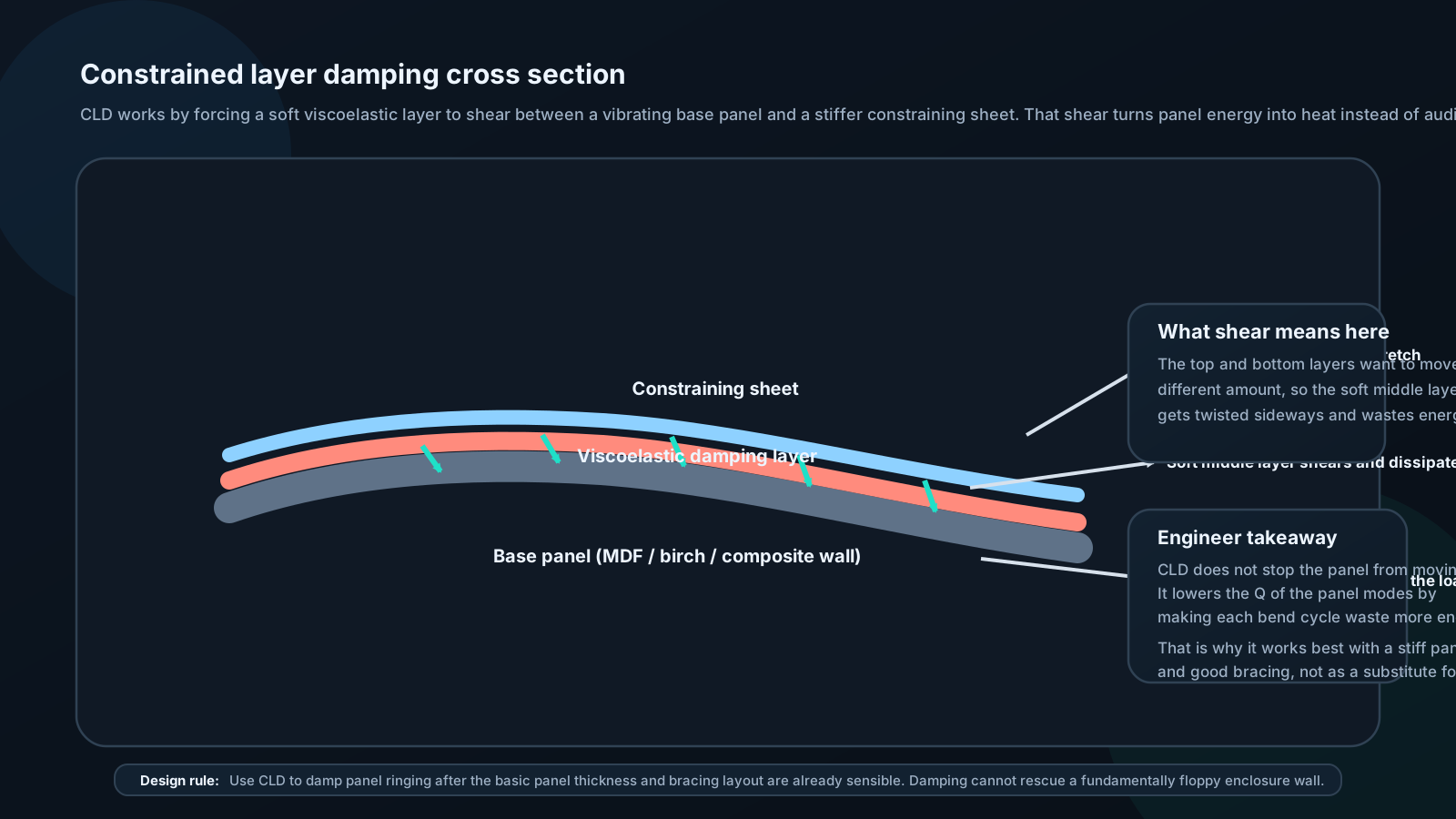
When a viscoelastic layer is sandwiched between the base panel and a constraining layer, bending of the base causes shear in the viscoelastic layer. Shear dissipates energy.
System loss factor:
η_total = η_v × H_c × g_c / (1 + g_c)
Where: - ηv = loss factor of viscoelastic layer (0.5–2.0 for butyl) - Hc = thickness parameter ratio - g_c = shear parameter
For practical CLD with butyl damping compound (2mm thick) on 19mm MDF:
Achievable η_total ≈ 0.1–0.3
Effect on Q of panel resonance:
Q_panel = 1 / η_total
Undamped: Q = 50–100 (sharp, ringing resonance) With CLD: Q = 3–10 (well-damped, minimal coloration)
Reduction in resonance peak:
Reduction_dB = 20 × log₁₀(Q_undamped / Q_damped)
             = 20 × log₁₀(50/5) = 20 dB