🔰 BEGINNER LEVEL: Understanding DSP Hardware
What DSP Actually Does
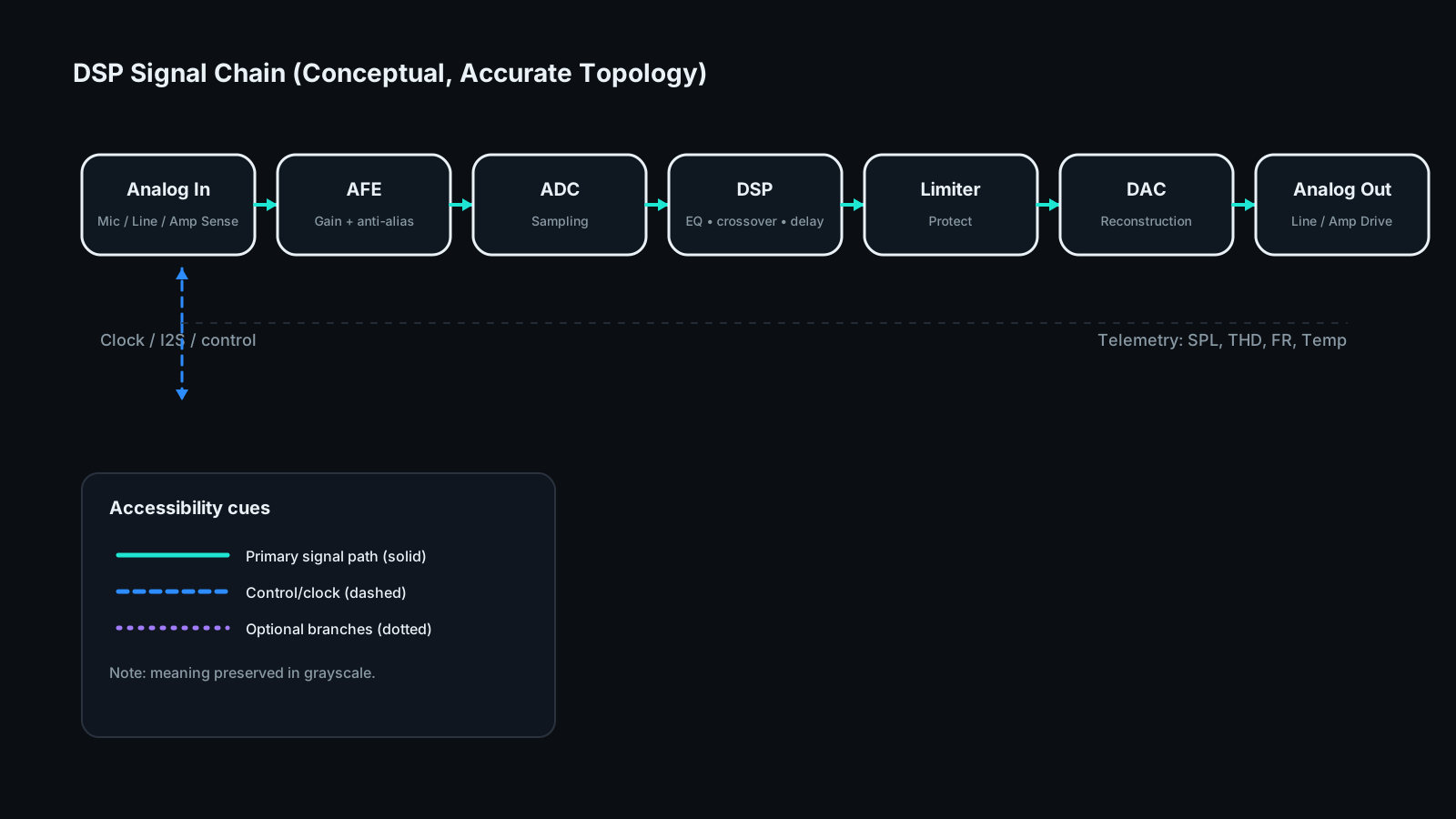
DSP converts your analog audio to digital numbers, processes those numbers with filters, delays, and level controls, then converts back to analog. The processing happens millions of times per second.
Why this matters:
Everything is software — crossover frequencies, EQ bands, time delays, output routing. Change a value in software, and it's instantly and repeatably applied. No component drift. No aging. No manual re-soldering.
Common DSP Products in Car Audio
Entry-level (basic crossovers + EQ):
- JL Audio FiX 86 — Factory integration focus, 8-channel, $300
- AudioControl LC-6i — 6-channel output, bass restoration, $230
- Stetsom DSP6 — 6-channel, budget-friendly, $80
Mid-range (full featured, measurable):
- miniDSP 2×4 HD — 2 in / 4 out, USB computer programmable, $100
- Helix DSP Mini — 6-channel, excellent filters, $280
- AudioControl D-6.1200 — Amp + DSP combo, 6-channel, $550
Professional / Competition:
- miniDSP C-DSP 8×12 — 8 in / 12 out, Dirac Live compatible, $650
- Helix DSP Pro — 6 in / 10 out, FIR capable, $900
- Alpine Bit One — 9-channel, OEM integration, $1,800
Software interfaces vary — miniDSP uses a clean plugin-based interface; Helix uses the powerful IP-Bus connected PC software. All allow saving and loading presets.
Programming a Basic System
Example: 2-way front + subwoofer
Hardware: miniDSP 2×4 HD Speakers: Tweeters (ch 1-2), Midbass (ch 3-4), Subwoofer (ch 5-6, bridged)
Step-by-step:
- Input routing: Stereo input → Ch 1 = Left, Ch 2 = Right
- Output routing:
- Output 1: Left tweeter (from Ch 1)
- Output 2: Right tweeter (from Ch 2)
- Output 3: Left midbass (from Ch 1)
- Output 4: Right midbass (from Ch 2)
- Crossovers:
- Outputs 1-2 (tweeters): HPF at 3,000 Hz, LR24 slope
- Outputs 3-4 (midbass): LPF at 3,000 Hz, LR24 slope; HPF at 80 Hz, LR24 slope
- Outputs 5-6 (subwoofer): LPF at 80 Hz, LR24 slope; Subsonic HPF at 20 Hz
- Delays: Enter calculated delays per output
- EQ: Apply corrections based on measurement
- Output levels: Match via SPL meter
Save as "System v1.0" before experimenting.