🔧 INSTALLER LEVEL: Competition Categories and Judging
Sound Quality Judging Criteria
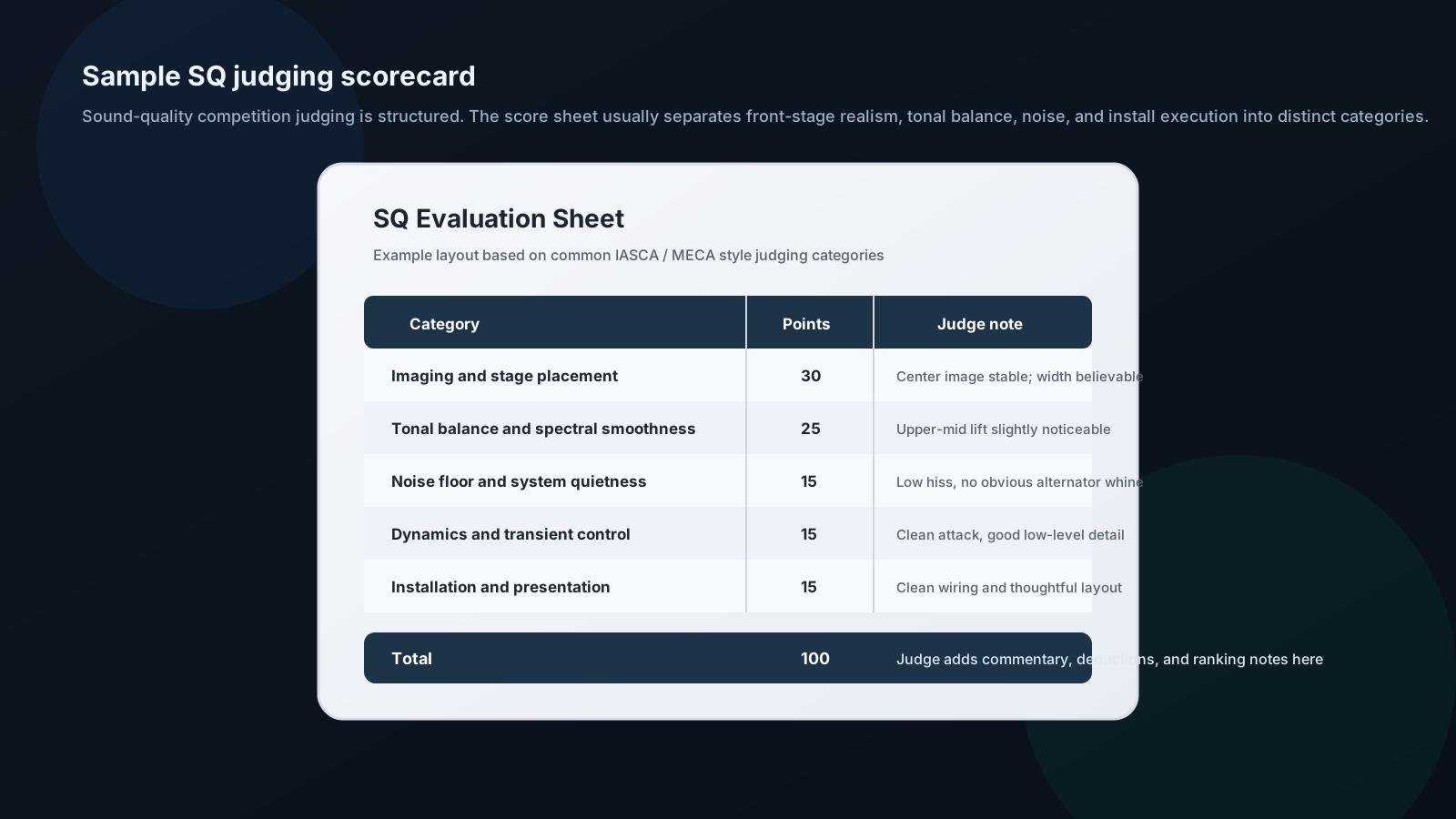
IASCA (International Auto Sound Challenge Association) SQ categories:
1. Imaging and Soundstage (30 points)
- Phantom center: Vocalist appears at center, not biased left or right
- Stage width: Sound extends at least to dashboard edges, ideally beyond A-pillars
- Stage height: Sound appears at dash height or above (not from floor or doors)
- Stage depth: Front-to-back layering — front elements forward, reverb trails back
- Image stability: Image stays locked as volume changes
How to optimize:
- Time alignment precise to 0.1 ms
- Level matching between L and R to 0.5 dB
- Tweeter placement at ear height or above
- Minimal reflections from windshield (damping or absorption)
2. Tonal Accuracy (25 points)
- Does the system reproduce spectral balance accurately?
- Does the bass have impact without boom?
- Are vocals natural and uncolored?
- Is treble extended without harshness?
Judges use reference recordings they know deeply. They listen for whether the system sounds like the recording or like "a car stereo."
How to optimize:
- Flat frequency response relative to target curve (not boosted bass)
- Low distortion at reference listening level
- Smooth crossovers with no dip or peak at transition frequency
- Subwoofer integrates seamlessly (listener can't localize it)
3. Detail and Resolution (20 points)
- Can you hear reverb trails clearly?
- Are subtle background elements audible?
- Is there a sense of "air" around instruments?
How to optimize:
- Low noise floor (no alternator whine, no hiss)
- Clean amplification (quality components, proper gain)
- High signal-to-noise ratio throughout chain
4. Dynamics (15 points)
- Does the system track transients accurately?
- Is there contrast between loud and soft passages?
- Does bass impact feel physical and controlled?
How to optimize:
- Sufficient headroom (no clipping at peaks)
- Adequate power for clean transients
- Subwoofer with good transient response (sealed preferred)
5. Overall Musicality (10 points)
- Subjective catch-all
- Does the system draw you into the music?
- Is listening fatiguing or pleasurable?
This is where taste meets technical excellence.
SPL Competition Categories
dB Drag Racing classes (example — rules vary by organization):
By vehicle type: - Street class: Must be street-legal, factory-installed glass - Modified: Significant vehicle alterations allowed - Extreme: Dedicated competition vehicles, any modification
By driver type: - Single driver: One subwoofer - Multiple drivers: 2, 4, or more
By test frequency: - Bass race: Competitor chooses frequency (50–65 Hz typical) - Fixed frequency: Organization sets frequency (e.g., 40 Hz, 50 Hz)
Scoring:
Single measurement at specified mic position (usually A-pillar area, or outside vehicle for termlab events). Highest dB wins. Simple.
MECA (Mobile Electronics Competition Association):
Separate SQ and SPL divisions with their own classes. SPL uses a handheld termlab meter. SQ uses live judging.
Building for SQ Competition
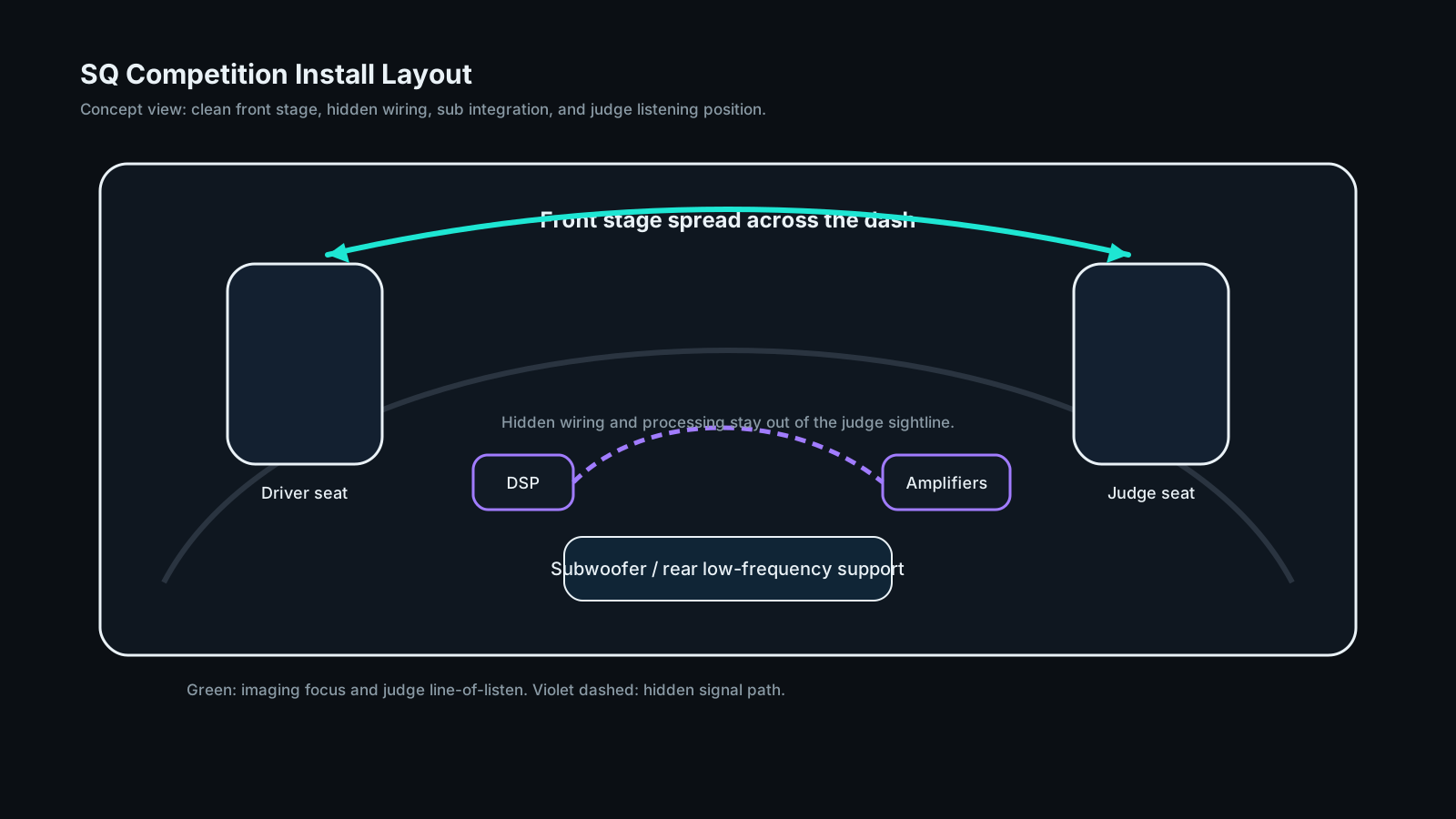
Component selection:
Tweeters: - Silk dome preferred (smooth, natural) - 25–28mm size - Low Fs (< 800 Hz) for low crossover option - Brands: Scan-Speak, Focal, Seas, ScanSpeak
Midrange: - 3–4 inch preferred - Low coloration, flat response - Smooth off-axis response - Brands: Seas, Morel, Peerless
Midbass: - 6.5–7 inch - Well-controlled - Sealed enclosure preferred - Brands: Focal K2, Morel Supremo, SB Acoustics
Subwoofer: - 10–12 inch typically - Fast, accurate — not loud - Sealed enclosure - Low Qts (0.4–0.5) for accuracy
Amplifiers: - Low noise floor is critical - Class AB preferred for SQ (lower residual noise than Class D) - High damping factor (>200) - Brands: Audison, Mosconi, Brax, Hertz
DSP: - Most comprehensive available - FIR linear-phase capability preferred - Full parametric EQ (10+ bands) - Fine time alignment (0.01 ms resolution)
Installation:
SQ judges score installation as part of overall presentation: - All wiring hidden or loomed - No visible RCA cables - Symmetrical placement of components - Professional fabrication of speaker baffles and pods - Clean treatment of all surfaces
Building for SPL Competition
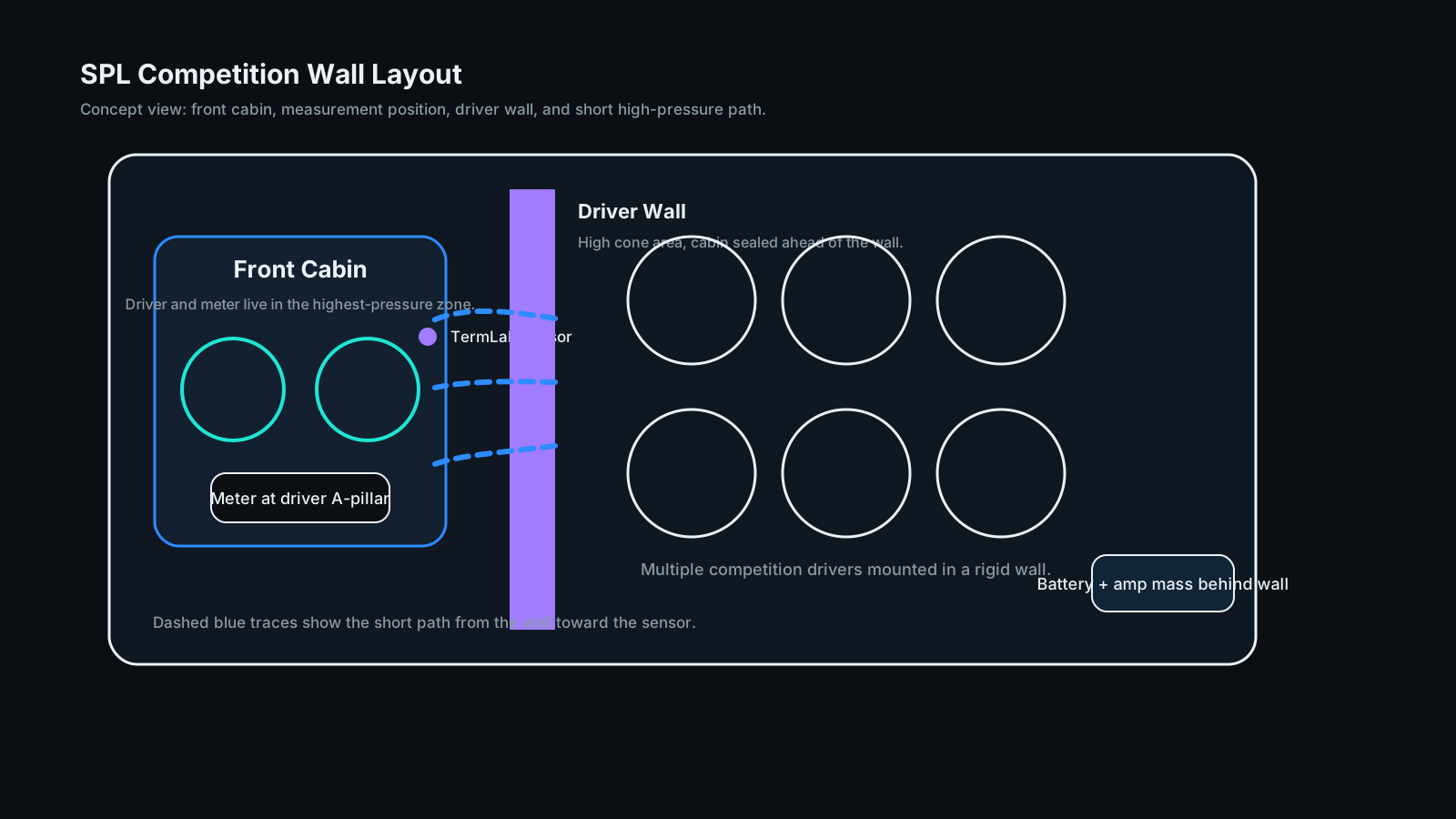
Driver selection:
The most critical choice in SPL:
- High sensitivity (92–96 dB @ 1W/1m)
- Large motor, high Bl
- Designed for bandpass loading
- Multiple drivers — 4, 8, or more
Enclosure:
Bandpass tuned to within 2 Hz of test frequency. Every Hz off costs output.
- Sealed rear chamber: 0.7–1.0 × Vas
- Ported front chamber: 1.5–2.0 × Vas
- Port: Large area, length tuned exactly
- Construction: Minimum 1.5" MDF, braced aggressively
Setup for test day:
- Measure box resonance with sine sweep
- Fine-tune port length if off-target
- Set amplifier gains maximally (within thermal limits)
- Test with competition meter before official run
- Close all windows, doors, vents
- Double hearing protection — always