Symptom Quick Reference
Use this page when you need the first branch fast. Match the symptom, do the first safe check, then open the deeper page only after you know which lane you are in.
Tiny Version
RPM noise usually means routing or grounding. Dimming and reset problems usually mean voltage loss. Heat and blown fuses mean stop and inspect power first.
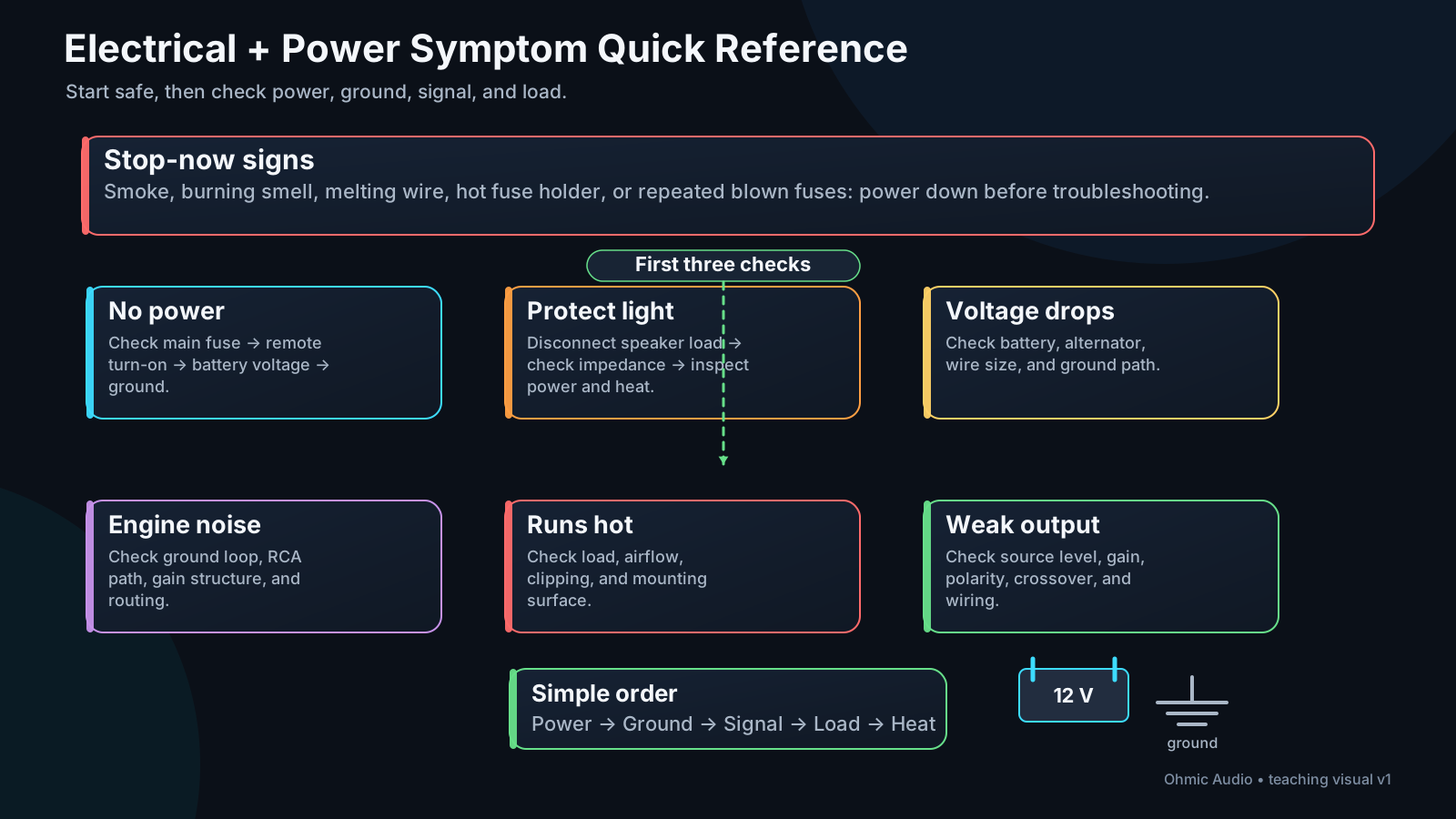
Stop First
- Burning smell, smoke, or hot wire - stop playing immediately and inspect power wiring, fuse hardware, and grounds.
- Fuse keeps blowing - do not keep replacing it. Find the short or overload first.
- Amplifier in protect - reduce load and check impedance, power, and speaker wiring before retrying.
Noise
- Whine rises with RPM - first check grounds, then open Alternator Whine.
- Clicking with RPM - first check RCA routing, then open Ignition / Engine Noise.
- Constant hiss - first check gain structure, then open Amplifier Hiss.
Power
- Headlights dim with bass - first measure system voltage under load, then open Headlights Dimming With Bass.
- Head unit resets on bass - first check supply sag and ground quality, then open Head Unit Resets On Bass Hits.
- Battery drains overnight - first measure key-off current, then open Parasitic Battery Drain.
Amplifier
- Amp gets too hot - first check airflow and load, then open Amplifier Runs Excessively Hot.
- Amp will not turn on - first verify remote, fuse, and ground, then open Amplifier Won't Turn On.
- Amp goes into protect - first reduce volume and inspect speaker load, then open Amplifier In Protection Mode.
Signal
- Turn-on thump - first check turn-on timing, then open Turn-On Thump / Pop.
- One channel dead - first swap RCA or speaker leads to isolate the lane, then open One Channel Dead.
- Source-specific problem - first isolate the source path before blaming the amp.
Electrical And Power First Checks
- Measure voltage at the battery and at the amplifier during the same bass event.
- Measure ground-side drop if the amplifier falls farther than the battery.
- Feel fuse holders, lugs, and grounds after the test for heat.
- Confirm the actual speaker load before blaming the amplifier.