Thiele-Small Parameter Reference
This is the fast card for the speaker parameters that actually help you make enclosure decisions. It is not the whole theory book. It is the "what should I look at first?" version.
Tiny Version
If you only remember one thing, start with Qts. Then use Vas and Fs to shape the box size and tuning. The rest helps refine the decision.
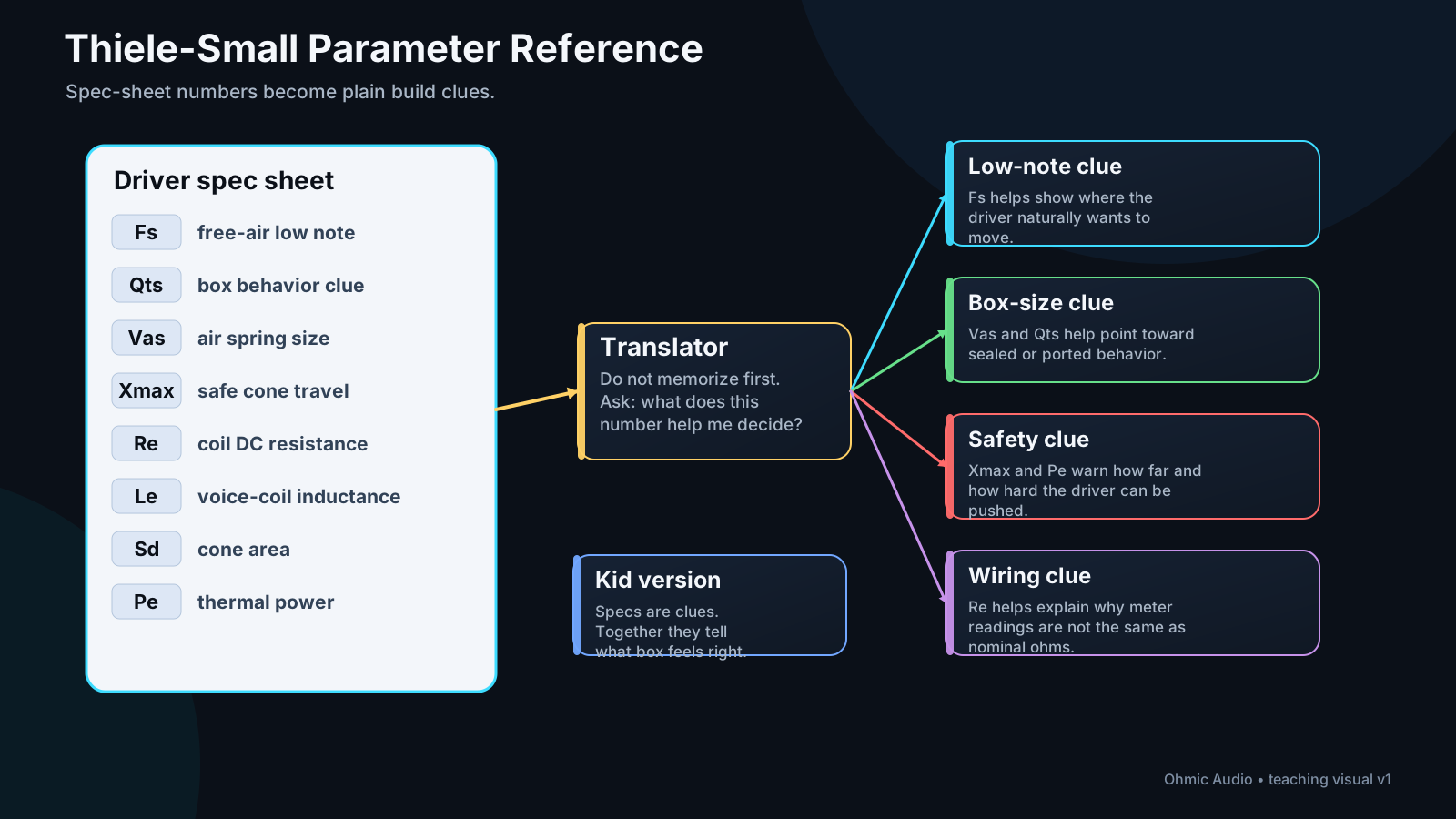
| Parameter | What it tells you | Why it matters first |
|---|---|---|
| Fs | Free-air resonance | Lower Fs often supports deeper bass potential |
| Re | DC voice-coil resistance | Helps explain real electrical load |
| Le | Voice-coil inductance | Affects upper-frequency rolloff and crossover behavior |
| Qes | Electrical damping | Contributes to system control |
| Qms | Mechanical damping | Tells you how the suspension behaves mechanically |
| Qts | Total system damping | Fastest first clue for sealed versus ported starting direction |
| Vas | Equivalent compliance volume | Helps estimate how large the enclosure wants to be |
| Xmax | Linear excursion | Shows how far the cone can move cleanly |
| Sd | Effective piston area | Helps estimate air-moving ability |
| Sensitivity | Output per watt | Tradeoff against power handling and low-bass goals |
| Pe | Power handling | Sets realistic thermal expectations |
Qts First Rule
- Qts below about 0.4 - ported or bandpass often makes sense first.
- Qts around 0.4 to 0.7 - either can work, depending on the rest of the design goals.
- Qts above about 0.7 - sealed is usually the safer first path.